- Wednesday, April 22, 2009, 18:45
- How-To, MySQL
- 1,851 views
Have you ever thought how does the search functionality is implemented in all the websites! Most of the internet blogs and websites are powered by MySQL database. MySQL provides a wonderful way (Full-text Search) of implementing a little search engine in your website. All you have to do is to have MySQL 4.x and above. MySQL ...
Full story
- Monday, March 16, 2009, 10:57
- MySQL, PHP, Web 2.0
- 8,692 views
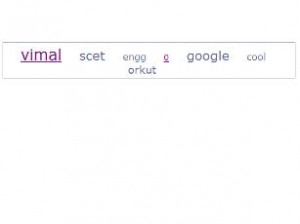
The basic idea this time is to present a way to form a tag cloud from user input text and text entered in the past. A tag cloud is a visual depiction of user-generated tags, or simply the word content of a site, used typically to describe the content of web sites.
for this we will create an HTML form that will accept user text & also ...
Full story
- Saturday, January 24, 2009, 18:00
- MySQL
- 2,089 views
Let us talk about Maria.. no no not Maria Sharapova, its new version of MyISAM engine for MySQL which is claimed to be crash safe and provides more concurrency. It aims at becoming fully transactional (ACID). Following are the features of Maria.
Features
ul.myPost li{text-decoration:none;border:none;list-style-type:disc;margin-left:10px;}
ACID (Atomicity, Consistency, Isolation, Durability)
Commit/Rollback
Concurrent selects (via MVCC)
Row locking
Group commit
Although Maria itselft is ...
Full story
- Tuesday, January 20, 2009, 12:58
- How-To, MySQL
- 14,824 views
Since its release in 1995, MySQL has became one of the most commonly used database in Internet world. A lot of small and medium businesses uses MySQL as their backend db. Its popularity for use with web applications is closely tied to the popularity of PHP, which is often combined with MySQL. Wikipedia runs on ...
Full story
- Friday, December 19, 2008, 9:22
- How-To, MySQL
- 2,963 views
Resetting the root password of a MySQL database is trivial if you know the current password if you don't it is a little trickier. Thankfully it isn't too difficult to fix, and here we'll show one possible way of doing so.
If you've got access to the root account already, because you know the password, you can change it easily:
gaurav@gaurav:~$ mysql --user=root --pass mysql
Enter password:
mysql> update ...
Full story
- Sunday, December 7, 2008, 12:44
- MySQL
- 1,455 views
Problem with comparison of float or double column in MySQL
I had a problem in comparing the number with decimal point with a float column in MySql. After some investigation I came to know that, in most of the computer architecture, the value of floating point numbers is stored as approximation. So if you compare the 21.40 with the given column, it actually compare the value ...
Full story
- Tuesday, December 2, 2008, 16:54
- How-To, MySQL, Tutorial
- 8,766 views
Lot of time we have requirement to update two tables simultaneously. Say for example, we have two tables CUSTOMER_DETAILS and CUSTOMER_ADDRESS. While adding a row in CUSTOMER_DETAILS, few details like address is first written in CUSTOMER_ADDRESS and its reference is added in CUSTOMER_DETAILS table. Now if ADD_ID is a primary key in CUSTOMER_ADDRESS table and if it is an auto increment field than how to ...
Full story
- Monday, November 24, 2008, 16:40
- How-To, MySQL
- 1,399 views
Setting up mysql password is one of the essential tasks. root user is MySQL admin account. Please note that Linux / UNIX login root account for your operating system and MySQL root are different. They are separate and nothing to do with each other (indeed some admin removes root account and setup admin as mysql super user).
mysqladmin command to change root password
If you have never ...
Full story